Maldives with a Baby or Toddler: Transfers, Food, Shade and Sleep
Maldives with a Baby or Toddler: Transfers, Food, Shade and Sleep
A holiday to the Maldives with a toddler can be wonderfully simple once you reach the right island. There are no daily sightseeing schedules to manage, the beach is close, and many resorts make family life feel easy. The challenge is that not every resort, villa or transfer works equally well for a baby or young child.
For parents of under-fours, the practical details matter more than the most impressive photographs. A beautiful resort may still be awkward if the transfer is long, the restaurants open too late, there is little usable shade, or everyone has to sleep in one open-plan room. This guide focuses on the four issues that most affect the day-to-day experience: transfers, food, shade and sleep.
For broader help comparing islands, facilities and family styles, start with our Maldives Family Resort Guide: How to Choose the Right Resort for Your Family. This article goes further into the needs of babies, crawlers and toddlers.
Is the Maldives a Good Holiday with a Baby or Toddler?
Yes, it can be an excellent choice, particularly for families who want a warm-weather resort holiday rather than a busy touring itinerary. Once you arrive, everything can be within walking distance, meals are usually available on the island, and there is no need to keep packing a day bag for excursions.
The Maldives is not automatically effortless, though. Each resort is a separate island with its own transfer arrangements, dining times, childcare rules, medical provision and villa layouts. You cannot assume that an item forgotten at home will be available in a nearby supermarket, and a toddler who is newly mobile creates different safety considerations from a baby who is not yet crawling.
The destination tends to work best for parents who are comfortable spending most of the holiday on one island and who choose the resort around their child's routine. Families looking for theme parks, frequent sightseeing or a large choice of shops and attractions beyond the hotel may prefer a different destination.
Planning the Maldives with a Toddler by Age and Stage
Age alone does not tell you what will work. A calm 18-month-old who is happy in a pushchair may be easier to manage than a fearless one-year-old who climbs, runs and heads straight for water.
- Non-mobile babies: feeding, sterilising, cot provision, shade and medical access may be the main priorities. A longer transfer can still be manageable if the timing is sensible.
- Crawling babies: floors, steps, hot decking and open terrace doors become more important. Ask whether the villa can be baby-proofed and where the cot can be placed.
- Newly walking toddlers: unfenced pools, direct beach access, jetty railings and gaps in decking need careful thought. A villa that looks convenient may require constant supervision.
- Running and climbing toddlers: island layout, distance to restaurants, shaded play areas and secure sleeping arrangements become more valuable than extra villa space alone.
- Children being toilet trained: check kids' club rules, swim-nappy requirements and whether changing facilities are readily available near the beach and pool.
This stage-based approach also helps avoid overpaying for facilities your child cannot yet use. A resort may advertise an impressive kids' club, but unaccompanied access often starts at age four. For a two-year-old, a shaded playroom, reliable babysitting and an early dinner may be more useful.
Getting from Malé Airport to Your Resort
The international flight is only part of the journey. After Velana International Airport, most families continue by speedboat, seaplane, or domestic flight and boat. Our guide to flights and transfers to the Maldives from the UK explains the wider journey, while the comparison below focuses on travelling with an under-four.
Speedboat Transfers
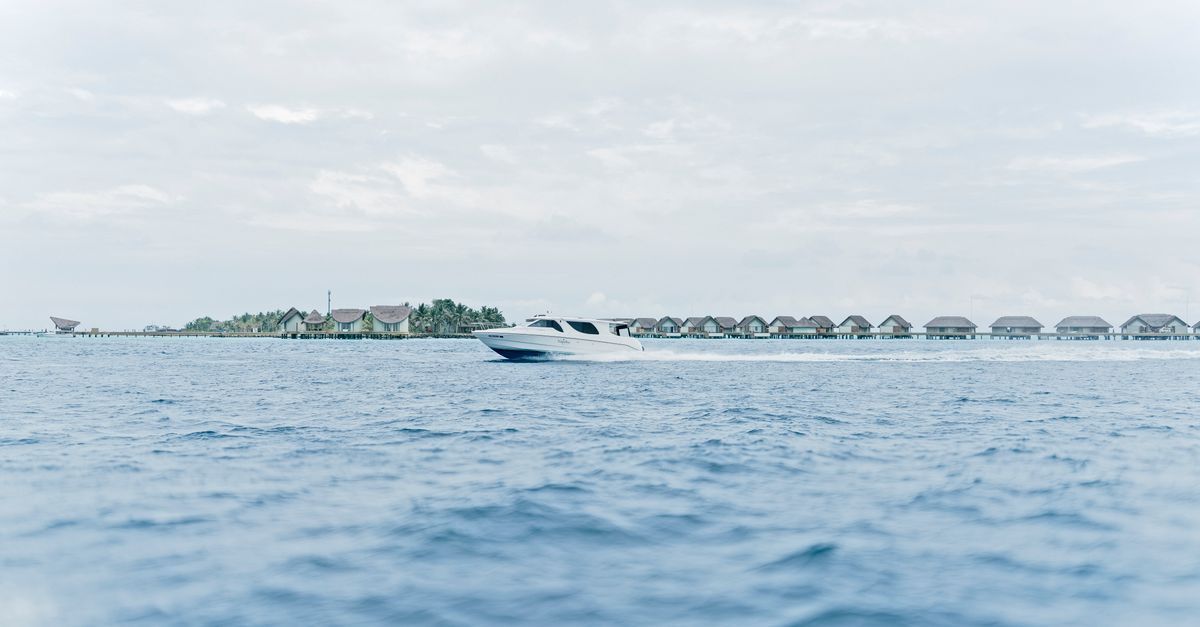
A short speedboat transfer can be the simplest option after a long flight. It usually leaves from close to the international terminal and can operate after dark, although schedules, sea conditions and resort arrangements vary.
The trade-off is motion. A 10-minute crossing and a 60-minute crossing are very different experiences with a tired toddler. Ask whether the boat is enclosed or open, whether child-sized life jackets are supplied, how long the expected journey is, and whether the resort combines passengers from several flights before departure.
Keep a change of clothes, wipes, a drink, a familiar snack, any essential medication and a light layer within reach. Do not pack everything needed for arrival into a checked suitcase that may be difficult to access on the boat.
Seaplane Transfers
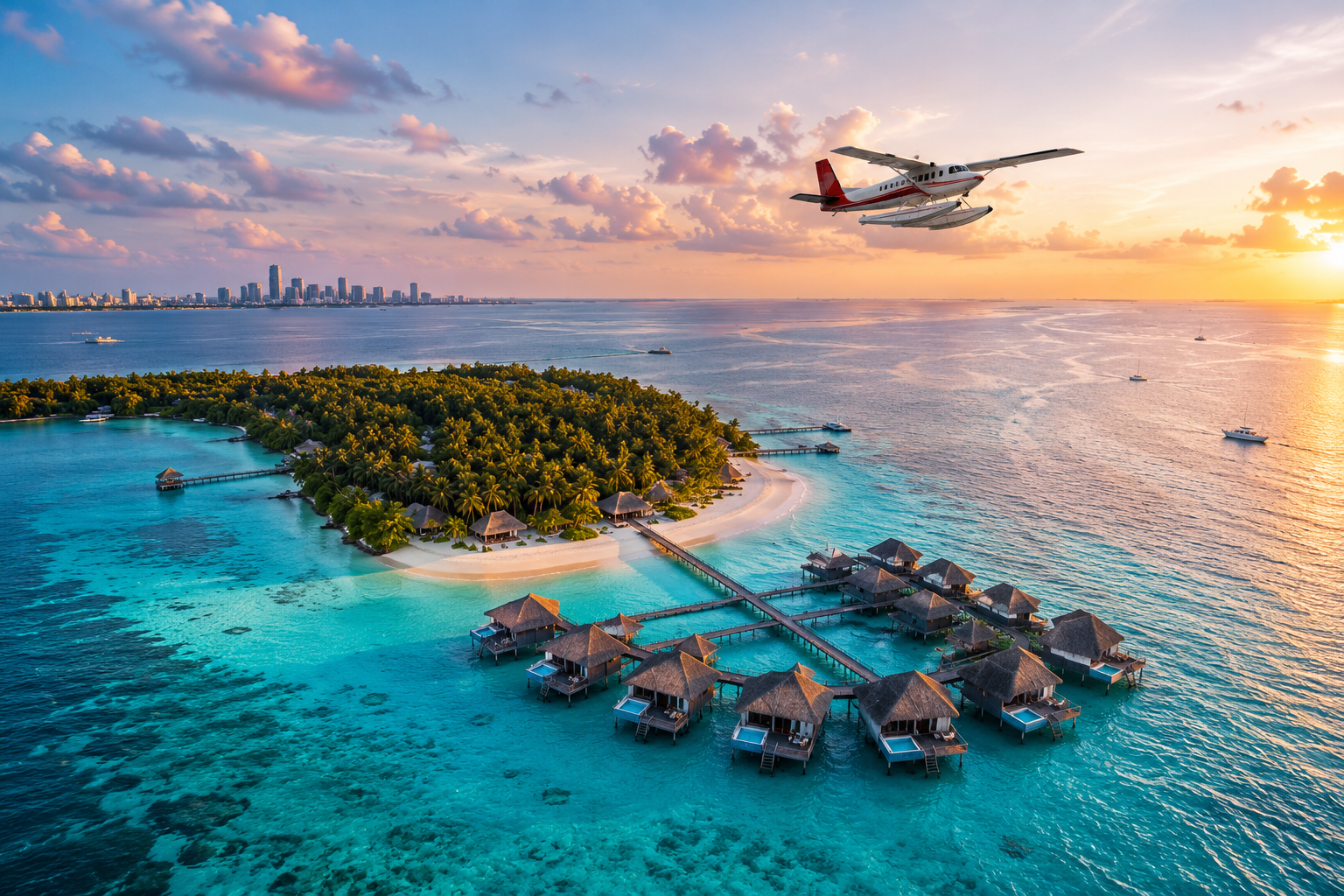
A seaplane can be memorable and may be preferable to a long speedboat journey, but it adds another stage. Seaplanes generally operate during daylight hours, so international arrival time matters. Current operator guidance should always be checked before booking because cut-off times and baggage limits can change.
There may be a wait in a shared or resort lounge while the flight is organised. Aircraft are compact and can be hot and noisy before take-off. Ear defenders can be helpful for young children, and parents should keep nappies, feeds, medicines and a complete change of clothes in cabin baggage.
Seaplane luggage allowances are often lower than international airline allowances, and infants may not receive a separate allowance. Read our detailed guide to speedboat and seaplane transfers in the Maldives before choosing flights or packing.
Current baggage example: At the time of review in August 2026, Trans Maldivian Airways lists a total allowance of 25 kg per person, made up of 20 kg of checked baggage and 5 kg of hand luggage. It does not provide an additional allowance for infants. Another operator or resort arrangement may use different rules, so always check the allowance attached to the actual booking rather than relying on the international airline allowance. See the current Trans Maldivian Airways baggage guidance.
Domestic Flight and Speedboat Transfers
Some more distant resorts use a domestic flight to a regional airport followed by a speedboat. This can provide access to excellent family islands, but it means another airport wait, another take-off and landing, and another transfer of luggage.
A well-timed domestic connection to the right resort may be easier overall than compromising on the island. Ask for the realistic total journey time, not just the airborne time, and what happens after a delayed international flight.
A Simple Transfer Decision Guide
| Transfer type | Often best suited to | Possible drawbacks | Questions to ask before booking | Keep in hand luggage |
|---|---|---|---|---|
| Speedboat | Families wanting fewer travel stages, particularly when the resort is a short journey from Velana International Airport. | Motion, sea spray, noise and a potentially uncomfortable journey if the crossing is long or conditions are unsettled. | Is the boat direct? What is the realistic journey time? Will it wait for other arriving passengers? Are child-sized life jackets supplied? Can it operate after a delayed evening arrival? | Nappies, wipes, a complete change of clothes, drink, familiar snack, essential medication and a light layer. |
| Seaplane | Resorts farther from Malé where the alternative would be a lengthy speedboat journey, provided the international flight arrives early enough. | Daylight restrictions, waiting time, noise, heat before take-off and tighter baggage allowances. | What is the latest suitable international arrival time? Is lounge access included? What allowance applies to the child, pushchair and infant equipment? What happens if the international flight is delayed? | Ear defenders, feeding supplies, nappies, wipes, spare clothing, comforter, essential medication and anything needed during a possible lounge wait. |
| Domestic flight and speedboat | Families choosing a more distant resort that is a better overall fit and those arriving too late for a daylight seaplane. | Another check-in, another flight and a final boat journey, with more luggage handling and possible waiting between stages. | What is the total expected journey time? How long is the connection? Is baggage checked through? What happens after a delay or missed domestic flight? | A carrier or sling, changing supplies, food and drink, spare clothing, medication, quiet toys and the items needed for an additional airport wait. |
Our guide to what happens after landing at Velana International Airport can help you picture the arrival process before you travel.
Choose Flights Around the Resort Transfer
The cheapest or fastest-looking international flight is not always the best family option. A late arrival can create an overnight stay near Malé when the selected resort depends on a daylight seaplane. A very early departure from the UK may also leave parents and children exhausted before the long-haul sector begins.
When comparing routes, look at the complete journey from your UK departure airport to the villa door. Consider the length of any stopover, whether luggage is checked through, the likely arrival time in Malé, the onward transfer window and how much recovery time the family will need.
Night flights can work well when a child sleeps on board, but this is never guaranteed. It may be worth prioritising a manageable itinerary over saving a small amount on the headline fare. Flight schedules and seasonal direct services change, so these should be checked for the actual dates rather than assumed from an older article.
How to Choose the Right Resort for an Under-Four
A family-friendly label is only a starting point. The right resort should make the ordinary parts of the day easier, not just offer a colourful kids' club.
- Transfer: Is the total arrival journey realistic after your chosen flight?
- Villa layout: Can the child sleep separately, or will every adult need to sit silently after bedtime?
- Location: How far is the villa from breakfast, the main pool and the children's facilities?
- Food: Are early meals, plain dishes, milk and allergy support available?
- Shade: Is there useful shade at the beach, pool, terrace and play area?
- Childcare: What is the minimum age for unaccompanied kids' club use, and what does babysitting cost?
- Medical support: Is there a resident doctor or clinic, and how would an emergency transfer work?
- Supplies: Can the resort provide cots, highchairs, sterilisers or bottle warmers, and what must be requested in advance?
The wider Maldives holidays for families page is useful when you are ready to compare the overall holiday style and suitable resorts.
Beach Villa, Garden Villa or Water Villa?
A beach villa is often the most practical option with a young child because there is no long walk along a jetty and the room is usually close to sand and vegetation. It is not automatically the safest. Direct beach access means a toddler can reach the water quickly, and a private pool may be unfenced.
A garden villa can be an excellent compromise. It may offer more separation from the shoreline, mature planting and an easier route to central facilities. The trade-off is that it may not deliver the uninterrupted beach view many families imagine when booking the Maldives.
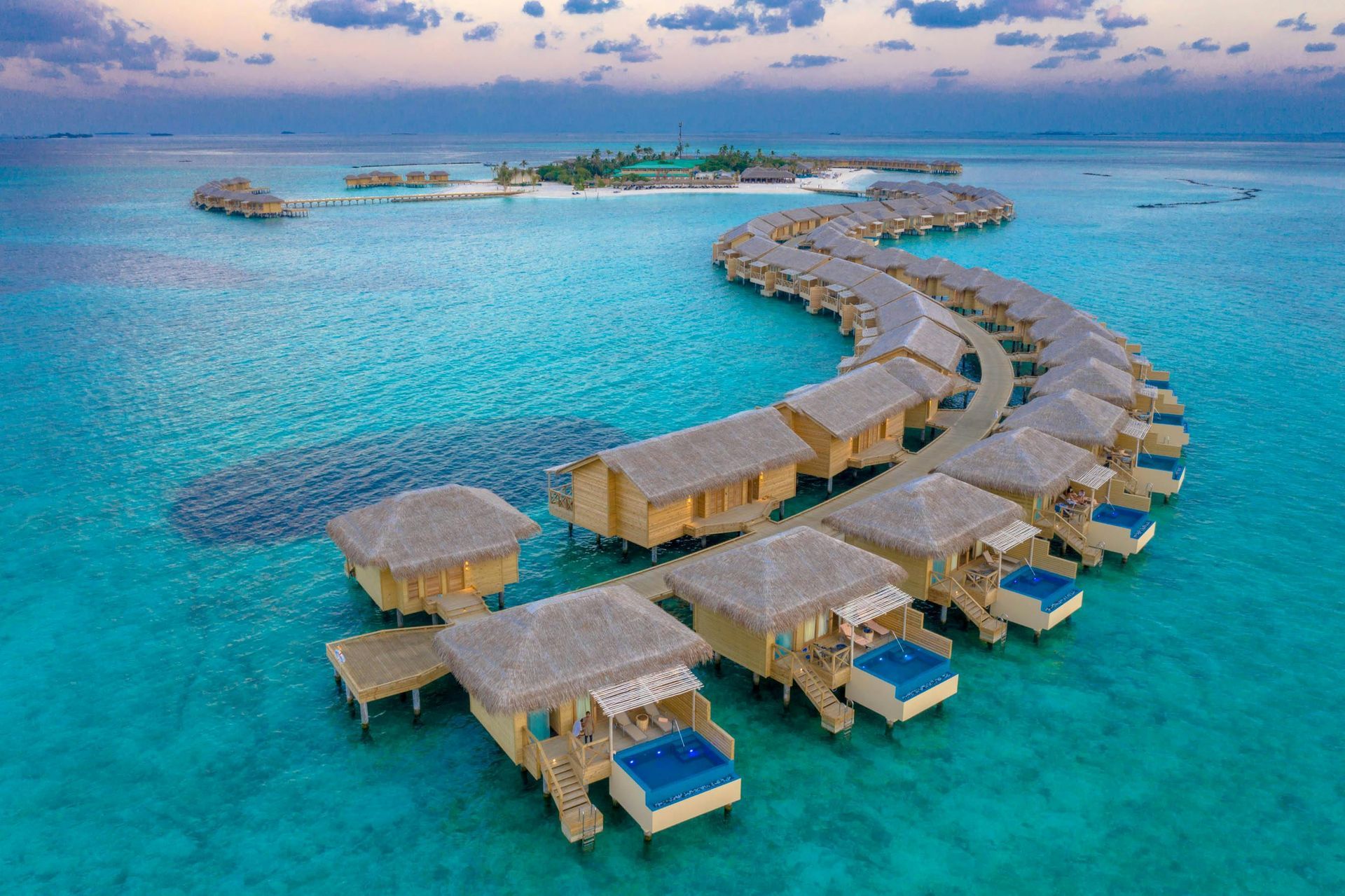
Water villas vary widely. Some resorts restrict young children, while others accept them with a signed parental acknowledgement. Check railings, gaps, steps into the lagoon, terrace locks, pool access and the distance along the jetty. Hot decking and a long walk to breakfast can matter just as much as the open water.
Our full beach villa versus water villa comparison explains the wider pros and cons. For a baby or toddler, ask for the exact floor plan and do not rely solely on the room-category name.
Food, Milk and Fussy Eating
Buffet dining can be very useful because parents can see the food, assemble a plain plate and avoid waiting through several courses. À la carte restaurants may offer more variety and better allergy control, but opening times and advance reservations can make them less flexible.
Before booking, explain the child's age and needs clearly. Ask whether the resort can prepare plain rice, pasta, vegetables, fruit, yoghurt, eggs or other familiar foods without heavy seasoning. If there is an allergy or intolerance, request the resort's current procedure rather than relying on a general statement that dietary needs are catered for.
Formula brands, specialist milk, pouches and toddler snacks may be unavailable or expensive on a resort island. Take enough essential products for the full stay, with a sensible contingency. Parents using bottles should ask about sterilising equipment, bottle warming, safe water, an in-villa fridge and access to a kettle or microwave.
Meal-plan wording also deserves attention. A child's inclusion can depend on age, restaurant, menu and booked offer. An all-inclusive plan may still exclude certain snacks, premium restaurants, room service or specialist products. Our guide to Maldives resort dining explains how buffets, à la carte restaurants and meal plans differ.
Questions to Ask the Resort About Food
- What time does breakfast start and when is the earliest evening meal?
- Are highchairs available in every restaurant?
- Can the kitchen prepare unseasoned food or purées?
- Which milk options are normally stocked?
- Can formula or specialist food be stored safely?
- Are a steriliser, bottle warmer, kettle and fridge available?
- How are allergies communicated between restaurants?
- Which meals, snacks and drinks are included for the child's age?
Shade, Heat and the Middle of the Day
Shade is one of the most overlooked resort-selection questions. The Maldives has intense tropical sun, and white sand and water can reflect light even when a child is under an umbrella. Sun protection matters, but so does choosing an island where the family can retreat comfortably.
Do not assume every beach villa has a shaded beach. Ask about mature vegetation, covered terraces, umbrellas, the direction the villa faces and whether the children's pool or splash area has a canopy. Beach shape and vegetation can vary around an island, so a room location may matter.
A practical rhythm is often beach or pool time in the morning, lunch and a nap or indoor activity during the strongest heat, then another swim later in the afternoon. Rash vests, hats and water shoes can help, but they are not a substitute for breaks from direct sun.
Also check the route between the villa and restaurants. A resort can have lovely shaded accommodation but long, exposed paths. For a toddler who refuses the pushchair, that can become a daily frustration.
Sleep, Naps and the Maldives Time Difference
Sleep is where room design becomes more important than room size. In an open-plan villa, a cot beside the adult bed may mean lights out for everyone. A separate children's room, screened sleeping area or spacious bathroom and dressing zone can make evenings much easier.
Ask where the cot will be placed and whether terrace or pool doors can be secured. Check blackout quality, air-conditioning, external lighting and possible noise from restaurants, bars, service areas, seaplane jetties or evening entertainment.
Maldives Time is five hours ahead of GMT. For UK families, this normally means the Maldives is five hours ahead when the UK is on GMT and four hours ahead during British Summer Time. Some resorts use their own island time, so confirm the time observed at the resort before deciding how to handle breakfast, naps, dinner and bedtime.
Some families adjust immediately, while others keep their child on a slightly later local schedule so that dinner remains manageable. There is no single correct method. The most practical approach is the one that protects enough sleep while still fitting the resort’s restaurant hours and the family’s plans.
A realistic day might involve breakfast soon after waking, outdoor time before the heat builds, a shaded lunch, a nap or quiet indoor period, a late-afternoon swim and an early dinner. The best routine is the one that preserves enough sleep without making the family miss every meal or activity.
On the return journey, expect a few disrupted nights while the child readjusts. Avoid planning important commitments immediately after arriving home where possible.
Jamie Says:
"When I compare resorts for a family with a baby or toddler, I start with the complete journey and the room layout, not the most dramatic photograph. A famous resort can still be the wrong match if a late flight creates an overnight stop, the toddler cannot use the kids' club, or everyone has to share one open room after bedtime.
I would rather recommend an island with a manageable transfer, useful midday shade and a villa that works around the child's sleep. Tell me the child's age, how they sleep, what they eat and how much travel the family can comfortably handle. Those details usually narrow the resort list far more effectively than star rating alone."
Kids' Clubs and Babysitting for Under-Fours
Many Maldives resorts have excellent children's facilities, but the minimum age for unaccompanied attendance is often four. Younger children may be welcome only with a parent, guardian or paid babysitter. A resort that lists a kids' club is therefore not necessarily offering included childcare for a toddler.
Ask for the current age bands, opening hours, charges, booking requirements and toilet-training rules. Find out whether one-to-one care is available, where babysitting takes place and whether evening care can be arranged in the villa.
For an under-four, the quality of the shaded play space may be more valuable than a long programme of activities. Check whether there is an indoor air-conditioned room, age-appropriate toys, a splash area and somewhere quiet if the child becomes overwhelmed.
What to Pack When Island Shops Are Limited
Resort boutiques usually carry a small selection of essentials, but brands, sizes and stock cannot be guaranteed. Pack enough of anything the child genuinely depends on.
- Nappies, wipes and swim nappies
- Formula, specialist milk or familiar pouches
- Favourite snacks for flights and transfers
- Regular medicines and a basic child-appropriate travel kit
- Thermometer and any prescribed items
- High-factor sun protection, hats and rash vests
- Water shoes for hot sand, coral fragments or decking
- Ear defenders for seaplanes or noisy environments
- Comforter, sleep bag and spare sleepwear
- A complete change of clothes in transfer-day hand luggage
Our detailed Maldives packing list covers luggage, documents, sun protection and transfer restrictions for UK travellers.
Medical Access, Insurance and Sensible Preparation
Medical provision differs by island. Some resorts have a resident doctor or nurse, while others have more limited first-aid support. More advanced care may require a boat, domestic flight or seaplane transfer to Malé or another island.
Ask what medical cover is on the island, how the resort handles an urgent transfer and whether transport operates at night. Take suitable travel insurance, declare relevant medical conditions and check that the policy covers the activities and travel arrangements planned.
Read the current FCDO Maldives health guidance before travel and obtain individual medical advice where needed. Our own Maldives safety advice for UK travellers brings together practical resort, water and insurance considerations without offering guarantees.
Three Maldives Resorts That Illustrate Different Family Priorities
These examples are not a universal ranking. They show how three very different resorts can solve different parts of the baby-and-toddler brief. Facilities, age policies, transfer rules and room configurations should be reconfirmed for the actual travel dates.
Niva Kurumba Maldives, North Malé Atoll: Best for a Very Easy Arrival
Who it suits: Families who want to minimise travel after the international flight and value a broad choice of restaurants.
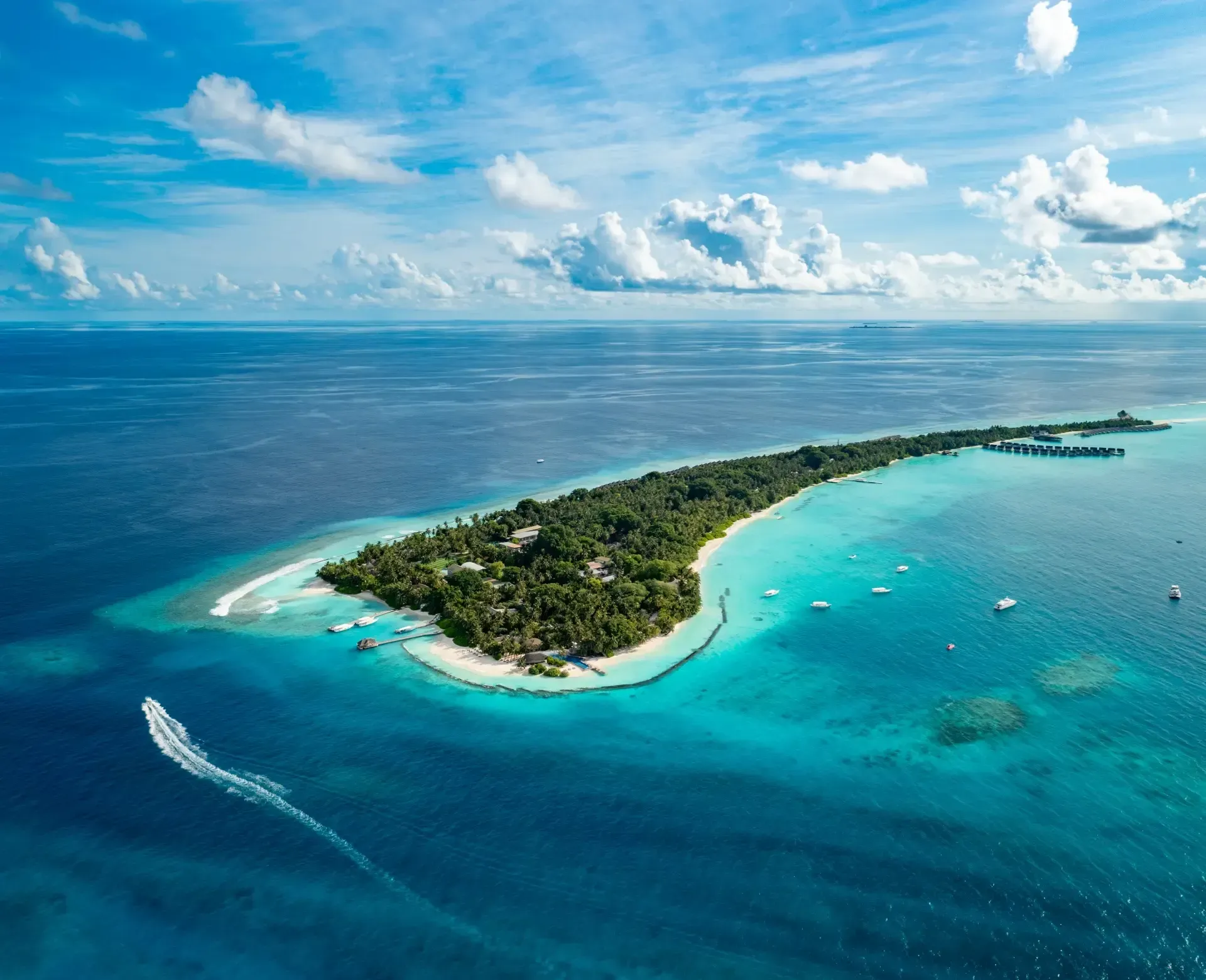
Atmosphere: Established, lush and relatively lively, with mature vegetation, a broad restaurant choice and one of the easiest resort arrivals from Velana International Airport.
Room to consider: The Two Bedroom Superior Room is a practical starting point for families who want separate sleeping space. It has two bedrooms joined by interconnecting doors, allowing parents to remain awake without sitting silently beside the child’s cot after bedtime.
Niva Kurumba is reached by a short speedboat journey from Velana International Airport, making it particularly appealing after a long flight with a tired child. The established island has mature planting, several dining options and family accommodation choices. Cots can be requested, and current official information lists medical support on the island.
Childcare reality: Niva Kurumba’s official Kids Club information currently lists the club for children aged 4 to 12. Families travelling with a younger child should ask what babysitting or parent-accompanied use is available for their dates rather than assuming toddler drop-off care is included.
Point to check: Ask for the best family room location, current babysitting arrangements, exact meal-plan coverage and the realistic transfer process for your flight arrival.
Niyama Private Islands Maldives, Dhaalu Atoll: Best for Specialist Toddler Facilities
Who it suits: Families prepared for a seaplane transfer in return for a substantial children's programme and a wide resort experience.
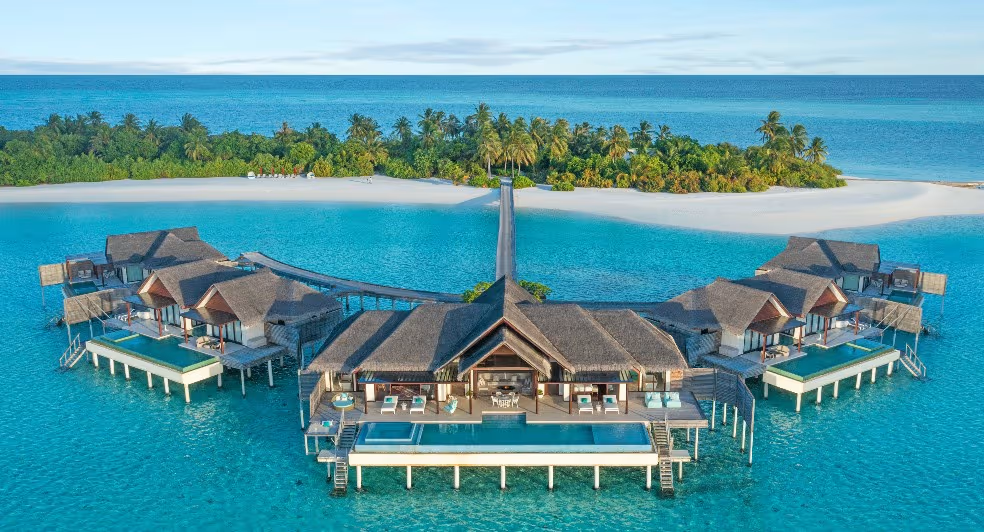
Atmosphere: Playful, active and highly family-focused, with the connected Play and Chill islands offering a mixture of energetic facilities and quieter spaces.
Room to consider: The Family Beach Pool Villa provides a living room that becomes the children’s sleeping area at night, close to the master suite. Toys and books are provided, but the direct beach access and private plunge pool mean close supervision remains essential.
Niyama's Explorers children's club has a dedicated age group for children aged one to three, which is unusual in the Maldives. The resort also offers family-focused accommodation, extensive dining and a large choice of activities across its two islands.
Toddler consideration: The one-to-three programme is chargeable and normally needs to be booked. The daylight seaplane transfer means the international arrival time and cabin-baggage planning require attention.
Point to check: Confirm childcare charges and hours, the most practical villa location, current seaplane timings and which restaurants fit the child's meal schedule.
Soneva Fushi, Baa Atoll: Best for Space, Separate Sleep and Natural Shade

Who it suits: Families with a very high budget who prioritise privacy, generous accommodation and room layouts that allow adults and children to sleep separately.
Atmosphere: Ultra-luxury, barefoot and nature-led, with dense vegetation, extensive privacy and some of the most spacious family accommodation in the Maldives.
Room to consider: The 1 Bedroom Soneva Fushi Family Suite with Pool is the clearest fit for a couple travelling with one or two young children. It includes separate sleeping areas, a dedicated children’s room and a kitchenette. The private pool and direct access towards the beach still require constant adult supervision.
Soneva Fushi is known for villas set within lush vegetation, and selected family categories include separate children's sleeping areas, family rooms and kitchen facilities. The resort has extensive dining and children's facilities, while its larger villas can make naps and evenings easier than a single open-plan room.
Toddler consideration: Children under four generally require an accompanying adult or arranged one-to-one care in the children's club. Many villas include pools, so supervision and door security remain essential despite the extra space.
Point to check: The resort is exceptionally premium and requires a seaplane or domestic-flight combination. Confirm transfer timing, the exact villa floor plan, pool barriers and the current childcare arrangement before committing.
Questions to Ask Before Paying a Deposit
- What is the complete journey from the international flight to the resort?
- What happens if the flight arrives after the final seaplane or connection?
- What luggage allowance applies to every transfer sector?
- Can the cot be positioned away from terrace, beach and pool doors?
- Is there a separate sleeping area and reliable blackout?
- What is the minimum age for unaccompanied kids' club attendance?
- What babysitting is available, at what times and at what cost?
- Can the resort provide highchairs, a steriliser and a bottle warmer?
- How are allergies, formula, milk and plain meals handled?
- Where is there genuine shade at midday?
- What medical staff and emergency-transfer arrangements are available?
- Which child meals, snacks and drinks are included in the booked plan?
Frequently Asked Questions
What is the best age to take a child to the Maldives?
There is no single best age. A non-mobile baby may be easier around pools and open water, while an older toddler may enjoy the sand, lagoon and children's facilities more actively. The right resort and villa matter more than a particular birthday.
Is a speedboat or seaplane easier with a toddler?
A short speedboat usually involves fewer stages, but a seaplane may be preferable to a long or rough boat journey. Compare total waiting and travel time, arrival hour, noise, motion and luggage rules rather than choosing by transport type alone.
Can you take a pushchair on a Maldives seaplane?
Pushchairs can normally travel as baggage, but they count towards the applicable allowance and may be loaded separately. Confirm the current operator and resort rules for your itinerary, and carry a sling or carrier in case the pushchair is not immediately available.
Do Maldives resorts provide cots and highchairs?
Many family resorts do, usually on request, but availability should be confirmed before travel. Also ask about cot style, mattress, location in the villa, highchairs in each restaurant and any charge for additional baby equipment.
What food can a toddler eat at a Maldives resort?
Many family resorts can offer simple choices such as fruit, yoghurt, eggs, rice, pasta, vegetables, soup and plainly cooked fish or chicken, particularly where buffet dining is available. The exact choice and preparation vary by resort, so ask in advance about plain meals, early dining, purées, allergies and the type of milk your child uses. Bring any formula or specialist food the child must have rather than relying on the island shop.
Can you buy nappies, wipes and formula at a resort?
Some resort shops stock a limited selection, but size, brand and availability cannot be relied upon. Bring enough essential supplies for the stay and transfer days, especially specialist formula, allergy products and preferred nappies.
Are water villas safe with a toddler?
They require constant supervision and careful assessment. Policies and designs differ, so check railings, gaps, terrace locks, steps into the lagoon, private pools and jetty distance. A beach or garden villa is often more practical, but it also has water-access risks.
How do toddlers cope with the time difference?
Some adjust quickly, while others remain closer to UK time for several days. Check the resort's local or island time and meal hours before deciding whether to shift the routine immediately or keep bedtime slightly later.
Can a toddler attend a Maldives kids' club without a parent?
Often not. Many clubs allow unaccompanied attendance from age four, while younger children need a parent, guardian, babysitter or paid one-to-one care. A small number of resorts offer dedicated programmes for one-to-three-year-olds.
Is all-inclusive worthwhile with a toddler?
It can make spending more predictable and provide easy access to meals and drinks, but child inclusions vary. Check snack times, milk, ice cream, room service, specialist restaurants and whether the child's age qualifies for the same plan.
What happens if a toddler becomes ill on a resort island?
The response depends on the resort's medical facilities and location. Ask whether a doctor or nurse is resident, what treatment is available and how an urgent transfer would work. Appropriate travel insurance and current official health advice are essential.
Plan a Maldives Holiday That Works Around Your Child
The best holiday to the Maldives with a toddler is not necessarily the resort with the longest facilities list. It is the island where the transfer, villa, food, shade and daily rhythm fit the child and the adults travelling with them.
Holidays to the Maldives is a specialist destination website, with holidays arranged by Jamie Wake Travel. Where applicable, flight-inclusive packages receive ATOL protection and bookings may also benefit from Protected Trust Services arrangements. The exact protection depends on what is booked, so read our ATOL and PTS protection information.
To compare resorts around your child's age, sleep pattern, feeding needs and preferred transfer, contact Holidays to the Maldives. A short list built around those practical details is far more useful than choosing from photographs alone.
About Jamie Wake
Jamie Wake is the founder of Holidays to the Maldives and Jamie Wake Travel, helping UK travellers understand the many choices involved in planning a Maldives holiday.
Jamie combines professional travel-industry knowledge with detailed resort and supplier research to help travellers compare islands, transfers, meal plans, room types, house reefs and holiday styles more confidently. His approach focuses on matching each traveller with the right resort rather than assuming that every Maldives island offers the same experience.
Through Holidays to the Maldives, Jamie shares practical, honest guidance about resort selection, water villas, all-inclusive packages, seaplane and speedboat transfers and planning a Maldives holiday that genuinely suits each traveller—not simply choosing the resort with the most impressive photographs.
Recent Posts